25 May, 2025
0 Comments
1 category
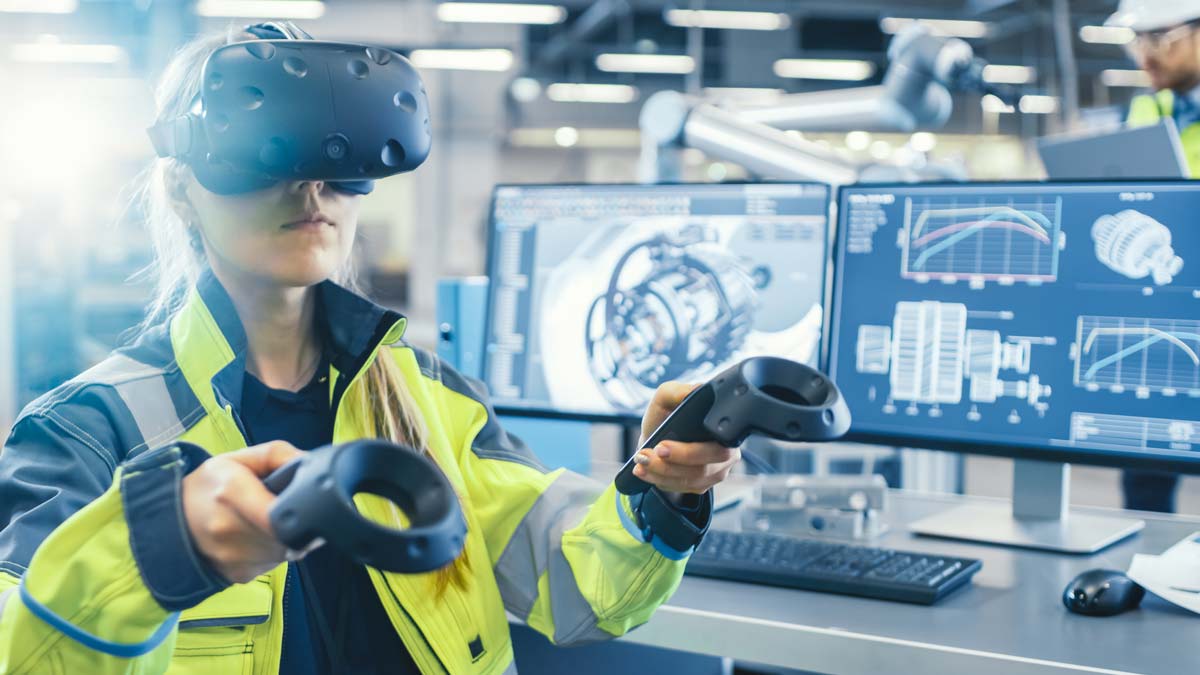
Extended Reality (XR)—which encompasses Virtual Reality (VR), Augmented Reality (AR), and Mixed Reality (MR)—is no longer confined to gaming and entertainment. It’s now a powerful engine for innovation in sectors that traditionally relied on in-person interaction, physical products, and legacy systems. From employee development and customer experience to virtual teamwork, XR offers immersive AR development , efficient, and scalable solutions. As businesses race to digitize operations and differentiate themselves in crowded markets, XR stands out as a transformative force that’s changing the way we learn, shop, and collaborate.
- XR in Training: From Manuals to Immersive Learning
In corporate and technical training, XR delivers a quantum leap in how knowledge is transferred and retained. VR-based training allows employees to learn by doing—without the risks or costs of real-world mistakes. A warehouse worker can practice forklift operation in a virtual environment, or a healthcare professional can rehearse complex surgeries using MR simulations. AR enhances on-the-job training by overlaying instructions or machine diagnostics in real time, helping new employees ramp up faster. Studies show that immersive training can improve retention rates by over 75%, reduce training time, and increase learner confidence—especially in high-risk or technical industries. - XR in Retail: Creating Personalized, Immersive Shopping
In retail, XR is reshaping customer experience by merging physical and digital storefronts. AR apps let users virtually try on clothes, glasses, or makeup before making a purchase—minimizing returns and boosting buyer confidence. Furniture brands like IKEA allow customers to place 3d models of products in their homes using mobile AR, making online shopping more interactive and personalized. VR, on the other hand, can create immersive virtual stores or branded showrooms where users explore product ranges without leaving their homes. This shift not only enhances engagement but also provides retailers with new ways to collect user behavior data and refine their offerings. - XR in Remote Collaboration: Beyond Zoom Calls
As hybrid and remote work becomes the norm, XR offers an alternative to flat, impersonal video meetings. Teams can now meet in shared 3d environments, using avatars to collaborate on designs, brainstorm ideas, or troubleshoot systems. With MR, team members can interact with digital prototypes in real space—perfect for industries like architecture, automotive, and manufacturing. Tools like Microsoft Mesh and Spatial make it possible to host virtual boardrooms or design review sessions that feel more natural and dynamic than traditional conferencing. These platforms reduce meeting fatigue, increase focus, and bridge the gap between remote and in-person collaboration. - The ROI of XR: Efficiency, Engagement, and Scalability
Implementing XR isn’t just about novelty—it delivers measurable business value. In training, companies have reduced costs by eliminating physical materials, travel, and instructor time. In retail, AR experiences have led to higher conversion rates and lower return rates. For collaboration, immersive XR tools have shortened development cycles and improved cross-functional communication. As XR becomes more affordable and hardware more accessible, organizations can scale these solutions across locations and departments. With platforms becoming more interoperable and cloud-enabled, it’s easier than ever to deploy immersive experiences across a global workforce or customer base. - Looking Ahead: Why Now is the time to invest in XR
The XR ecosystem is maturing fast, with advances in spatial computing, AI integration, and device affordability accelerating adoption across industries. Apple’s Vision Pro, Meta’s Quest 3, and other next-gen headsets are pushing the boundaries of what’s possible in immersive experience. Companies that embrace XR today are not only improving current operations but also preparing for the next wave of human-computer interaction. Whether you’re training employees, enhancing retail engagement, or transforming remote teamwork, XR offers a strategic advantage that goes beyond the buzz. Now is the time to explore how immersive tech can deliver long-term value for your business.
Category: Uncategorized